

We always look forward to relaxing on the porch or on the couch after a long day of standing or walking. Our dogs are not much different from us. After a long run or a day of being outside, they too want to rest somewhere comfortable in the evenings.
It is important that your dog has comfortable flooring in its dog kennel or dog house where it can fully relax. The right dog kennel flooring can make a big difference in your dog’s comfort, safety, and overall health. Let’s look at some dog kennel flooring ideas and decide what the best one is for you and your dog.
Table of Contents
Why is Dog Kennel Flooring Important?

Because dogs spend a lot of time in their kennel, it is important that it is composed of the right materials. Is it slippery? Is it going to accumulate a lot of dirt and grime? Will it withstand chewing, scratching, and other destructive behaviors? Is it going to be high maintenance to clean? These are all things you’ll want to consider when researching dog kennel flooring ideas and choosing dog kennel flooring for your dog.
When comparing options, the best dog kennel flooring for drainage may be different from the best choice for senior dogs or for outdoor kennels. For example, outdoor dog kennel flooring needs to handle rain, mud, and changing temperatures, while flooring for older dogs should offer extra traction and cushioning. If your kennel is used daily, you may also want easy-to-clean dog kennel flooring that resists odors, moisture, and wear.
Comparing Dog Kennel Flooring Options
| Flooring Type | Comfort | Traction | Drainage | Cleaning Difficulty | Durability | Cost |
| Rubber Flooring | Excellent | Excellent | Fair-Good | Easy | Good | $$ |
| Epoxy Flooring | Fair-Good | Fair-Good | Fair | Easy | Good | $$ |
| Kennel Deck Flooring | Good | Good | Good | Moderate | Good | $$ |
| Gravel Flooring | Fair | Good | Excellent | Moderate-Difficult | Good | $ |
| Tenderfoot Flooring | Excellent | Excellent | Good | Easy | Good | $$ |
| Raised Flooring | Fair-Good | Good | Excellent | Easy-Moderate | Good | $$$ |
| Polyurea Flooring | Good | Excellent | Fair-Good | Easy | Excellent | $$$ |
Rubber Flooring for Outdoor Dog Kennels
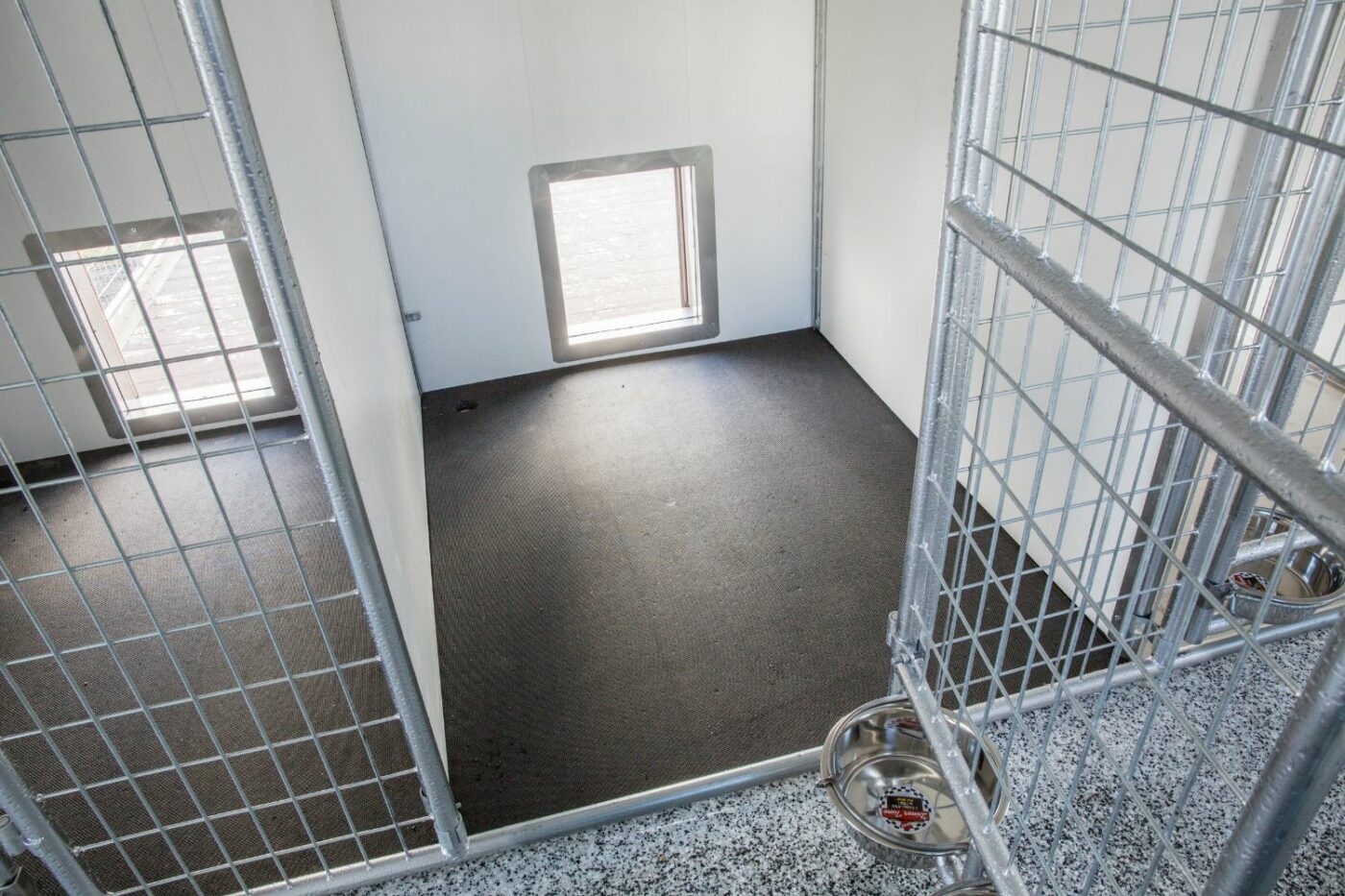
The first type of flooring on our list is a popular choice of flooring: rubber. This type of flooring in a kennel is made from durable and resilient natural or synthetic rubber and is cushioned to help reduce strain on a dog’s joints. Let’s look at some pros and cons of rubber flooring for your dog kennel.
Pros
- Comfortable– Rubber flooring is usually well cushioned, making it a good choice for your dog to lie down on, play on, or walk on. It offers joint support and reduces the risk of injuries.
- Durable– Rubber flooring is also durable and resistant to scratches, chewing, and heavy use. It is generally a long-lasting flooring option.
- Easy to Clean– Not only is it durable, but rubber flooring is also easy to maintain and clean. It can be swept, mopped, and doesn’t absorb liquids easily.
- Non-slip– If you are worried about your dog slipping on a wet kennel floor, no worries here. Rubber flooring offers a non-slip grip for your pet, reducing the risk of them falling and being injured.
Cons
- Retains Heat– Though rubber flooring may be well cushioned for your dog, it does have a tendency to retain heat. Be careful not to have it in direct sunlight, or the rubber may become hot and uncomfortable for your dog.
- Odor– Over time, rubber flooring may tend to start to stink if not cleaned properly. Be sure to regularly clean and maintain the kennel to keep unpleasant odors at bay.
- Potential for Staining– While it is mostly resistant to stains, rubber flooring may stain when certain oils or chemicals are spilled and not cleaned up properly.
Conclusion
Rubber flooring is a good option if you want safety and comfort for your dog; just be careful to keep it properly cleaned and out of direct sunlight.
Epoxy Flooring for Outdoor Dog Kennels
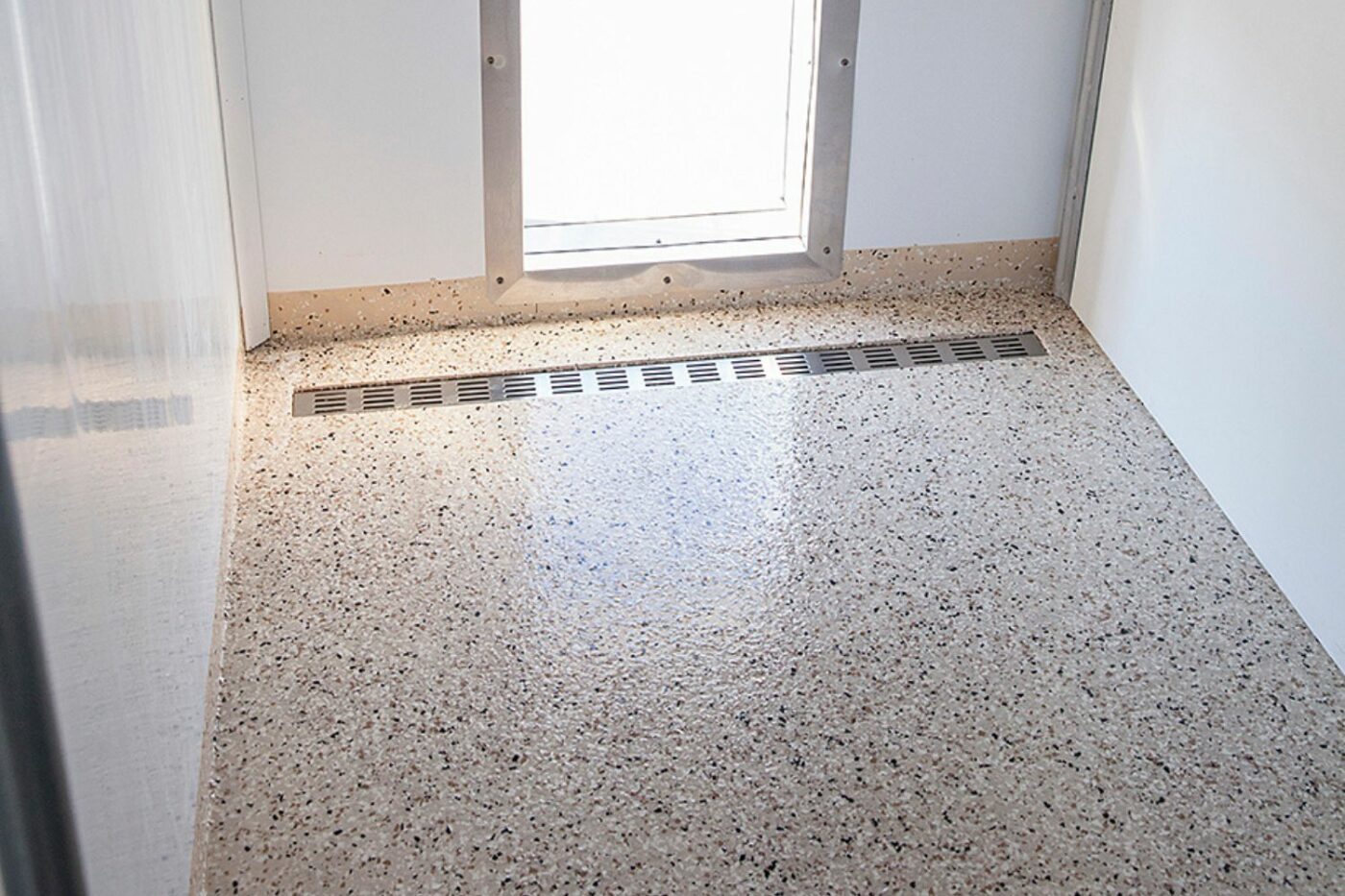
Epoxy flooring is made by combining epoxy resin and hardening agents. It is a special type of strong and protective coating that covers floors like concrete or wood. There are several pros and cons of epoxy flooring for your dog kennel.
If you want to learn more about epoxy flooring and its installation, check out this article.
Pros
- Chemical Resistant– Epoxy flooring has excellent resistance to chemicals, oils, cleaning agents, and other substances.
- Easy to Maintain– Because it has a smooth and seamless surface, epoxy flooring is easy to maintain and clean. It resists stains and dust, and regular maintenance is easy.
- Hygienic– Epoxy flooring is non-porous and therefore more resistant to mildew, mold, and other harmful bacteria for your dog.
Cons
- Complexity in Installation– Properly installing epoxy flooring is a meticulous process and involves cleaning, patching, and priming the surface. It may require professional expertise for the best results.
- Slippery when wet– This type of flooring may become slippery when exposed to certain liquids. A textured surface may help to improve traction and reduce the risks of injury.
- UV Exposure– Some types of epoxy flooring may yellow or fade when exposed to long periods of radiation or sunlight. Unless a UV-resistant coating is used, it’s not a good choice for areas with a lot of direct sunlight.
Conclusion
Epoxy flooring may be a good choice for dog kennel flooring, especially commercial, just be sure you invest in a type of flooring that is resistant to UV radiation and has a textured surface for a non-slip grip.
Kennel Deck Flooring for Outdoor Dog Kennels
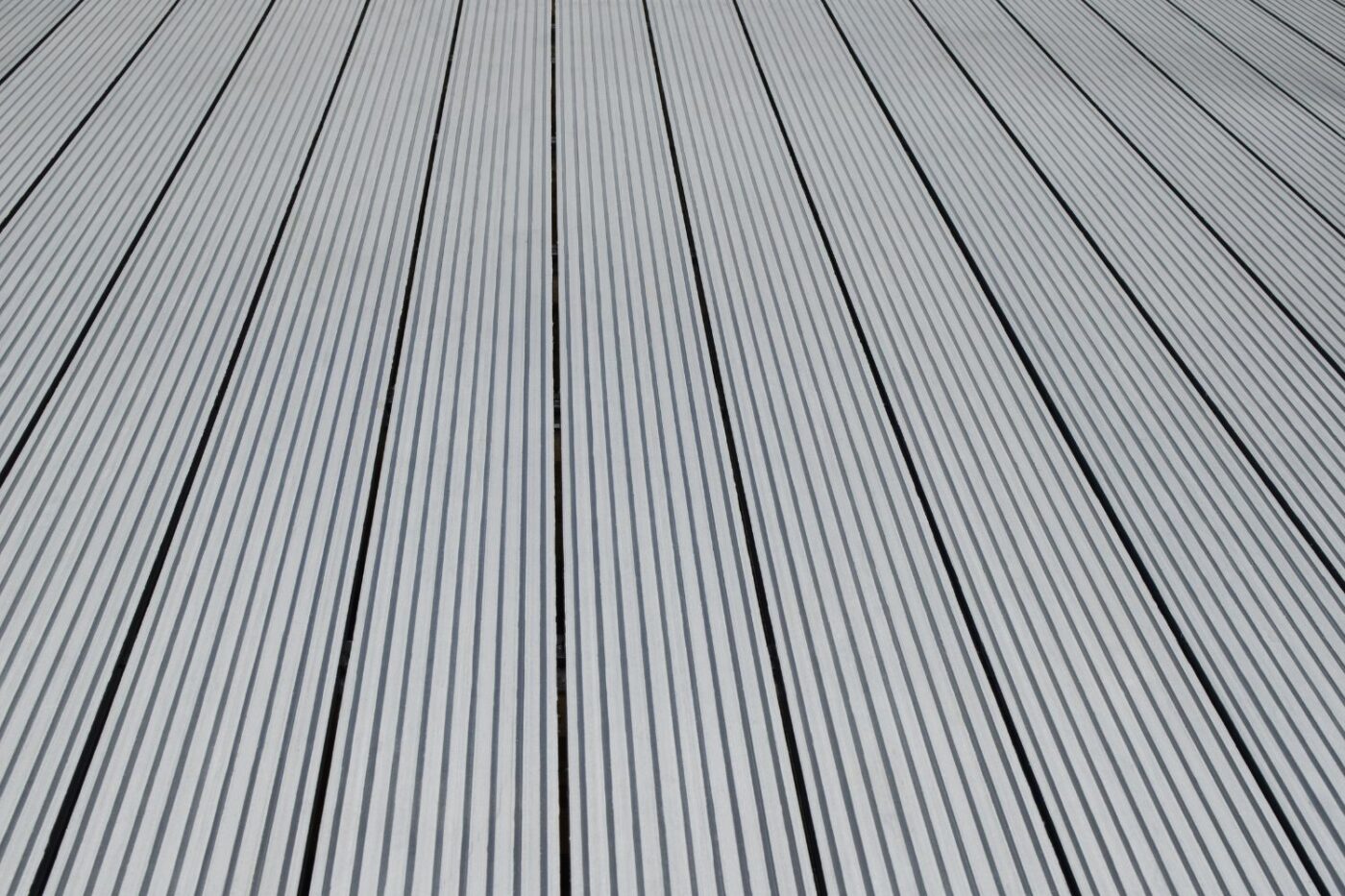
Kennel deck flooring is a specific type of flooring designed specifically for dog kennels and pet enclosures. It is modular flooring made from high-density plastic with interlocking panels that create a solid surface for dogs to walk on.
Pros
- Elevated Surface– Kennel deck flooring is elevated, therefore keeping your dogs off the ground and away from dirt, mud, and water, making their environment cleaner and hygienic.
- Drainage– This type of flooring makes for better drainage because the panels have slats that allow liquids to run through, keeping the kennel area dry and puddle-free.
- Modular and Portable– Because it is modular, kennel deck flooring is easy to customize and install. It is also easy to disassemble and move as necessary.
Cons
- Limited Insulation– While it does provide some insulation from hot and cold, kennel deck flooring does not provide the same insulation as some other types of flooring and may need additional measures to ensure the kennel stays comfortable in extreme conditions.
- May Wear Down– If a dog is especially prone to destructive behaviors, kennel deck flooring may wear down over time and show some signs of damage. Be sure to keep a close eye on the state of your kennel.
- Not Soundproof– Because kennel decking does not provide excellent noise insulation, if you have a noisy dog, you might want to consider soundproofing your kennel a bit better.
Conclusion
Kennel decking is a good choice for flooring because of its elevated surface and hygienic conditions; however, it may not be ideal if you have an aggressive or noisy dog.
Gravel Flooring for Outdoor Dog Kennels
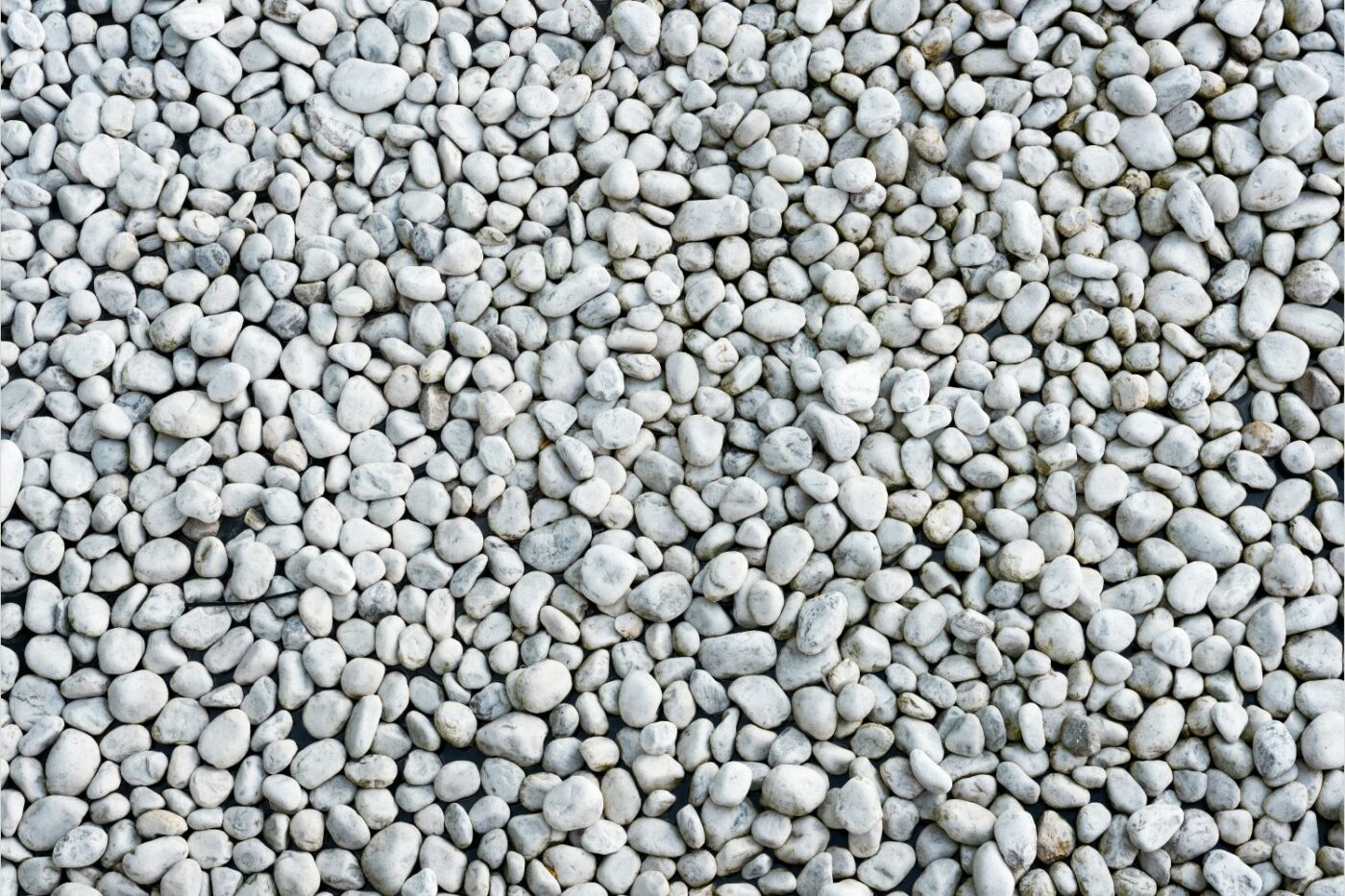
Probably the cheapest option on our list of dog kennel flooring ideas is gravel flooring. Be careful to choose a size of gravel that is easy to walk on and won’t get stuck in the dog’s paws. Let’s look at some pros and cons of gravel flooring.
Pros
- Drainage– Because it is permeable, gravel flooring in a kennel allows for good drainage and will prevent puddles and make for a drier environment.
- Good Traction– While some other flooring options may tend to be slippery, gravel will provide good traction for your dog and will help to prevent injury from falling.
- Natural Digging– Dogs love to dig, and gravel flooring in the kennel may allow them to engage in natural digging behaviors and destress.
Cons
- Tracking– Sometimes, gravel flooring may cause increased tracking, especially if gravel gets caught in the dog’s paws and is carried outside the kennel into the lawn or into the house.
- Allergies and Irritation- Some dogs have allergies and sensitivities to gravel, so be sure to monitor their reaction to gravel flooring to ensure they are not reacting negatively. If your dog is prone to sensitivities, consider other types of flooring for your kennel.
- Leveling and Maintenance- Though gravel is relatively easy to maintain, it does need to be raked and leveled regularly to keep the surface even and remove waste.
Conclusion
Gravel flooring can be a good option if you want to be cost-effective, just be sure you get the right size of gravel (not so small that it gets stuck in their paws and not too big that it can be a choking hazard or hurt their paws) and be considerate of your dog’s sensitivities.
Tenderfoot Flooring for Outdoor Dog Kennels
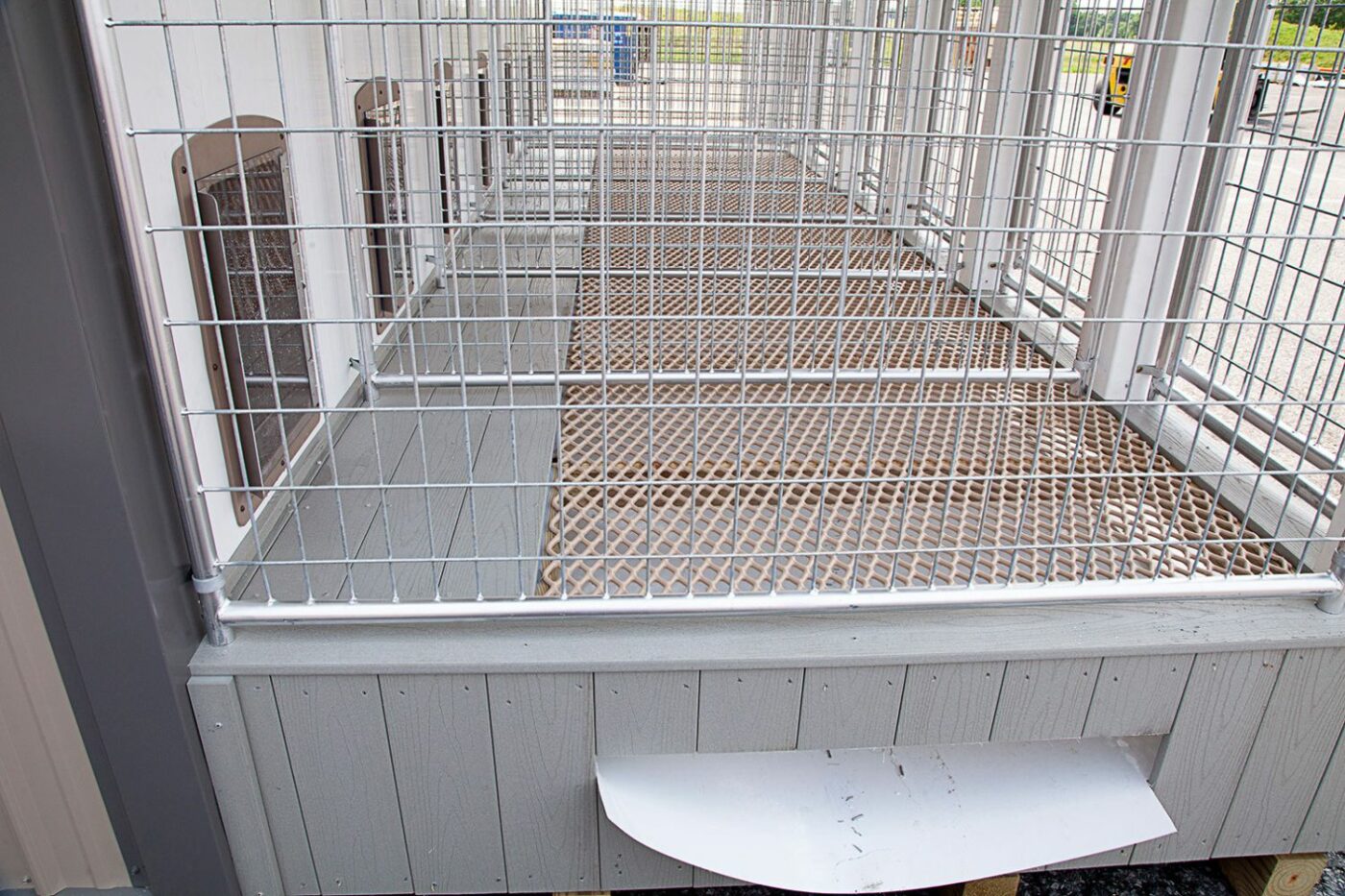
One of the best dog kennel flooring ideas for your dog kennel is Tenderfoot Flooring. This is a popular type of flooring that is made of rubber or plastic materials and has an interlocking design. Here are the pros and cons of tenderfoot flooring for your dog kennel.
Pros
- Comfortable– Tenderfoot flooring is known to be just that, tender to your dog’s feet. The resilient rubber or plastic material offers support and reduces stress on the dog’s joints.
- Easy to Clean and Hygienic– The non-porous surface of Tenderfoot flooring makes it easy to clean and hygienic. Simply mop down the floor or use a hose to rinse it.
- Durable– Tenderfoot flooring is known for its longevity and durability. It can withstand heavy use, scratching, and chewing without a lot of damage.
Cons
- Initial Cost- Tenderfoot flooring can tend to be a bit expensive upfront compared to some other flooring options
- Odor– If not cleaned regularly and properly, tenderfoot flooring may have a tendency to retain odors.
- Limited Aesthetics– Because it is primarily for functional purposes, this type of flooring may not be the best choice if you are concerned about aesthetics or design flexibility.
Conclusion
Tenderfoot flooring is an excellent choice for kennel flooring. Just be sure to consider the upfront price and regularly clean it to prevent any type of odor.
Raised Flooring for Outdoor Dog Kennels
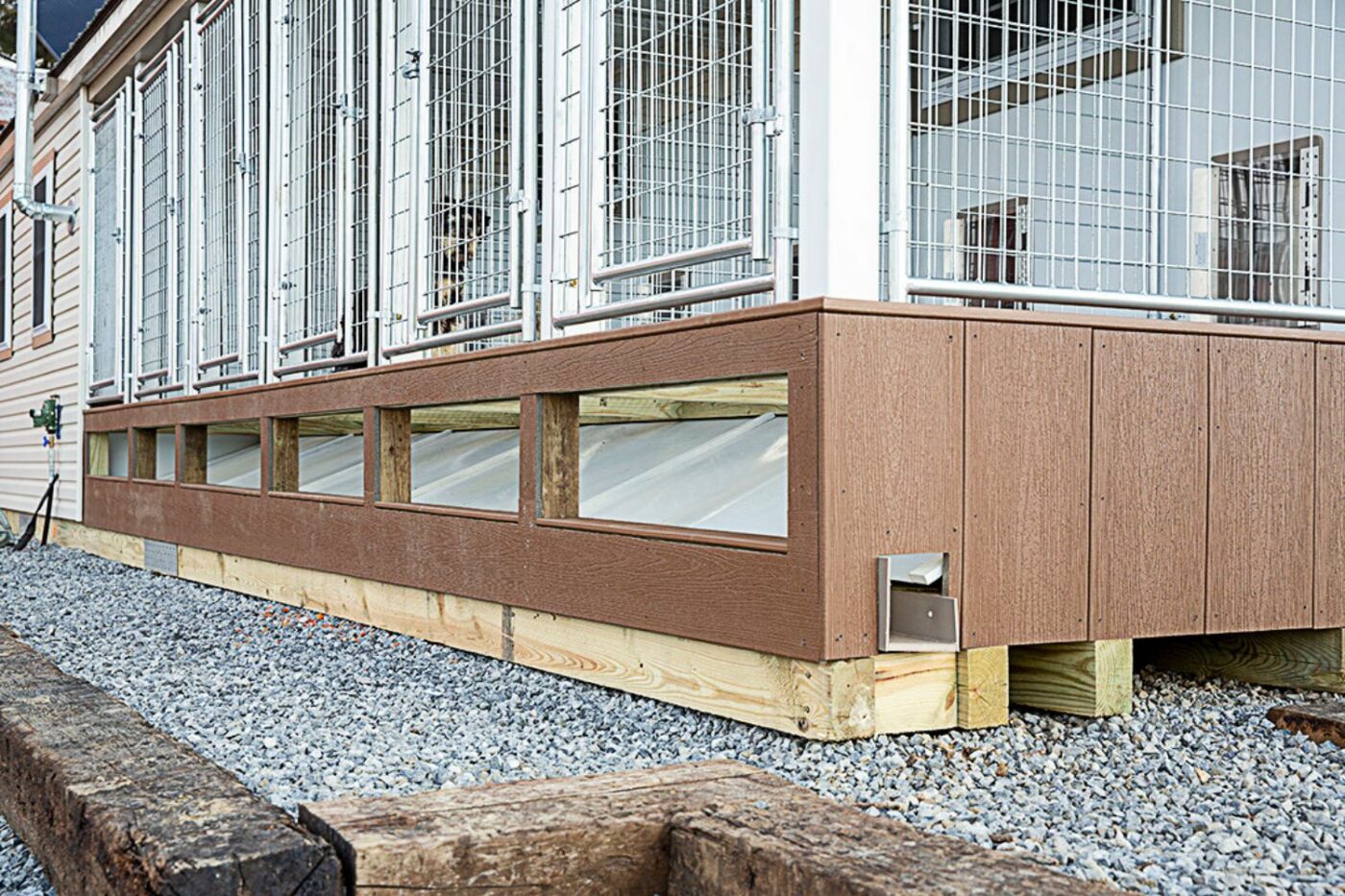
This type of flooring system is elevated, creating a gap between the floor and the base of the kennel. Here are the pros and cons of raised flooring in a dog kennel.
Pros
- Ventilation– Kennels with raised flooring have much better airflow and ventilation, especially under the kennel. This reduces the buildup of moisture, odors, and potentially harmful gases.
- Drainage– The slatted design of raised kennel flooring makes for better drainage and allows liquids to pass through the gaps, reducing the formation of puddles.
- Insulation– Raised flooring on kennels makes for better insulation, due to the fact that it keeps dogs directly off the cold ground in the winter.
- Hygiene– A raised kennel makes for easier cleaning since waste materials can be easily removed from the gap underneath. A raised kennel is less likely to have bacterial buildup or odor.
Cons
- Cost– These types of flooring for dog kennels often cost more upfront. The installation and maintenance requirements may add to the overall costs.
- Maintenance- Raised floor kennels may require extra maintenance, such as cleaning the gaps and the area underneath.
- Stability and Safety– Depending on the size and the construction of the kennel, raised flooring kennels may have gaps or spaces that could pose a risk for smaller dogs, especially.
Conclusion
Raised flooring for your dog kennel is a good way to keep your kennel ventilated and hygienic, just take the extra cost and maintenance into consideration.
Polyurea Flooring for Outdoor Dog Kennels
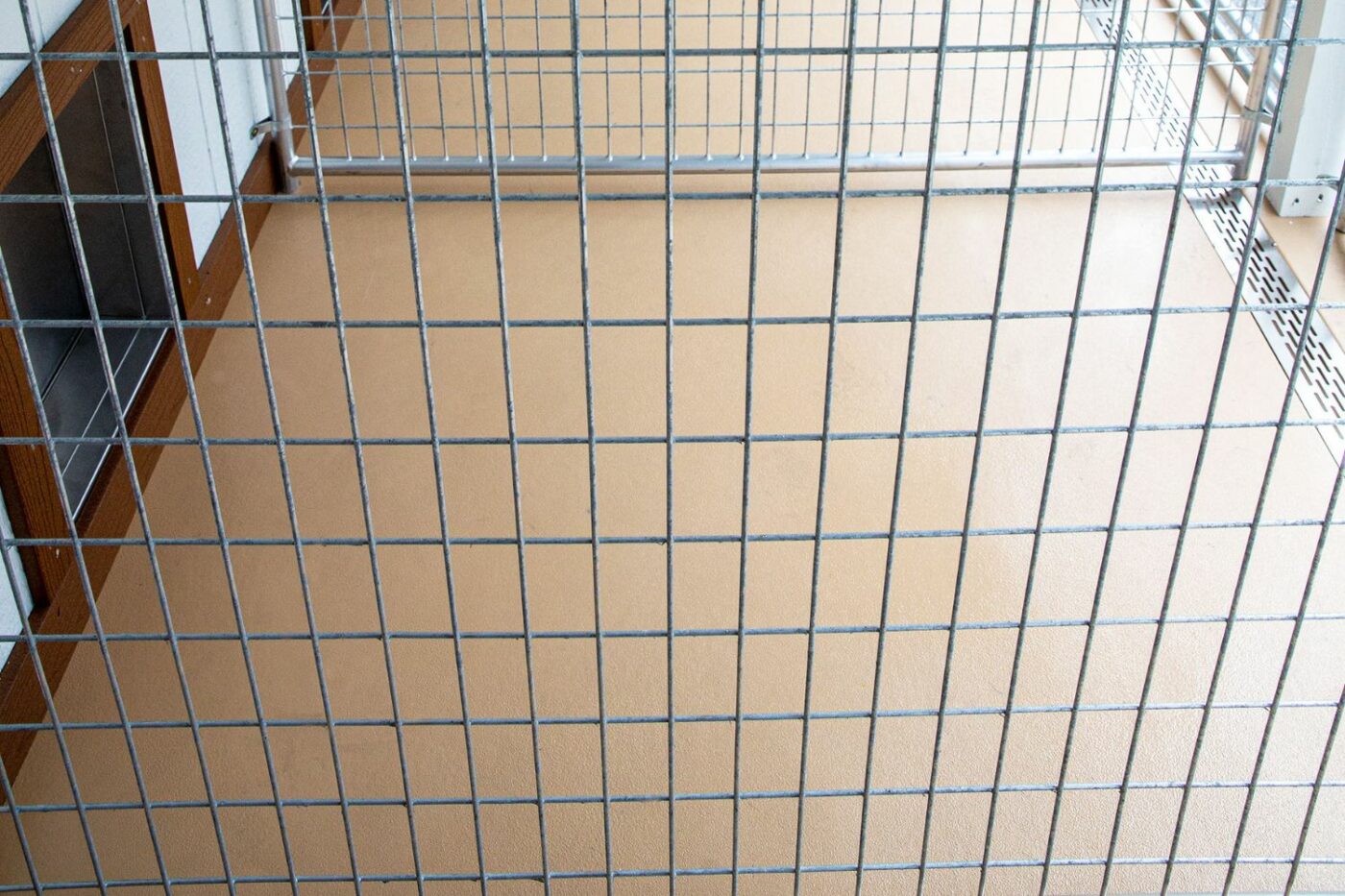
Polyurea flooring is a coating that is known to be extremely durable and protective, and is much stronger and slip-resistant than epoxy. It combines resin and a hardener to form a tough and flexible coating. It is generally added as a liquid formulation to a prepared substrate. It is highly resistant to scratches and exposure to various substances. If you want to learn more about polyurea and its benefits, check out this article.
Pros
- Durable– Polyurea flooring is known to be very durable and can withstand a lot of foot traffic, making it a good choice for a dog kennel
- Resistant to Chemicals- This type of flooring is resistant to chemicals like cleaning agents and disinfectants used in dog kennels.
- Quick Installation– Polyurea coating has a fast application and curing process, and dries quickly
Cons
- Cost– Polyurea flooring does tend to cost more upfront. The cost includes materials and professional installation for larger kennels, especially
- Limited DIY Application– Because it requires professional installation and specialized equipment, it may not be the best decision to try it yourself.
- UV Stability– Some types of polyurea may have limited resistance to UV rays and may fade or degrade over time if exposed to too much direct sunlight.
Conclusion
Polyurea Flooring is a prime choice if you purchase the kennel with it already installed, but not the best choice for DIY applications.
New Dog Kennel Flooring Trends to Consider in 2026

Dog kennel flooring continues to evolve, with more options focused on comfort, drainage, cleanability, and material safety. If you are comparing dog kennel flooring in 2026, here are a few trends worth considering.
Low-VOC and PFAS-Conscious Materials
More dog owners are looking for low-VOC and PFAS-conscious flooring options, especially for enclosed kennels, dog houses, or covered runs. When comparing mats, coatings, sealers, or rubber flooring, look for low-odor materials and ask whether the product is made without intentionally added PFAS.
Antimicrobial Surface Claims
Some kennel flooring products advertise antimicrobial or odor-resistant surfaces. These features can be helpful, but they should not replace regular cleaning. Before choosing one, check what the claim actually covers, how long the treatment lasts, and whether the manufacturer provides testing or registration information to support it.
Heat-Reflective Coatings
In sunny climates, kennel floors can get hot quickly. Lighter colors, shaded areas, and heat-reflective coatings may help keep outdoor dog kennel flooring more comfortable during warm weather. This is especially important for concrete, epoxy, and polyurea surfaces exposed to direct sunlight.
Permeable Base Systems
For outdoor kennels, drainage is still one of the most important factors. Permeable base systems, such as gravel bases, drainage grids, or raised panels, can help reduce standing water, mud, and odor. These systems work best when installed with proper slope and drainage.
Hybrid Flooring Setups
Hybrid setups are also becoming more popular. For example, sealed concrete with rubber kennel mats can provide an easy-to-clean base with added comfort and traction. This type of setup works well for dog owners who want durability without sacrificing cushioning.
Dog Kennel Flooring Considerations
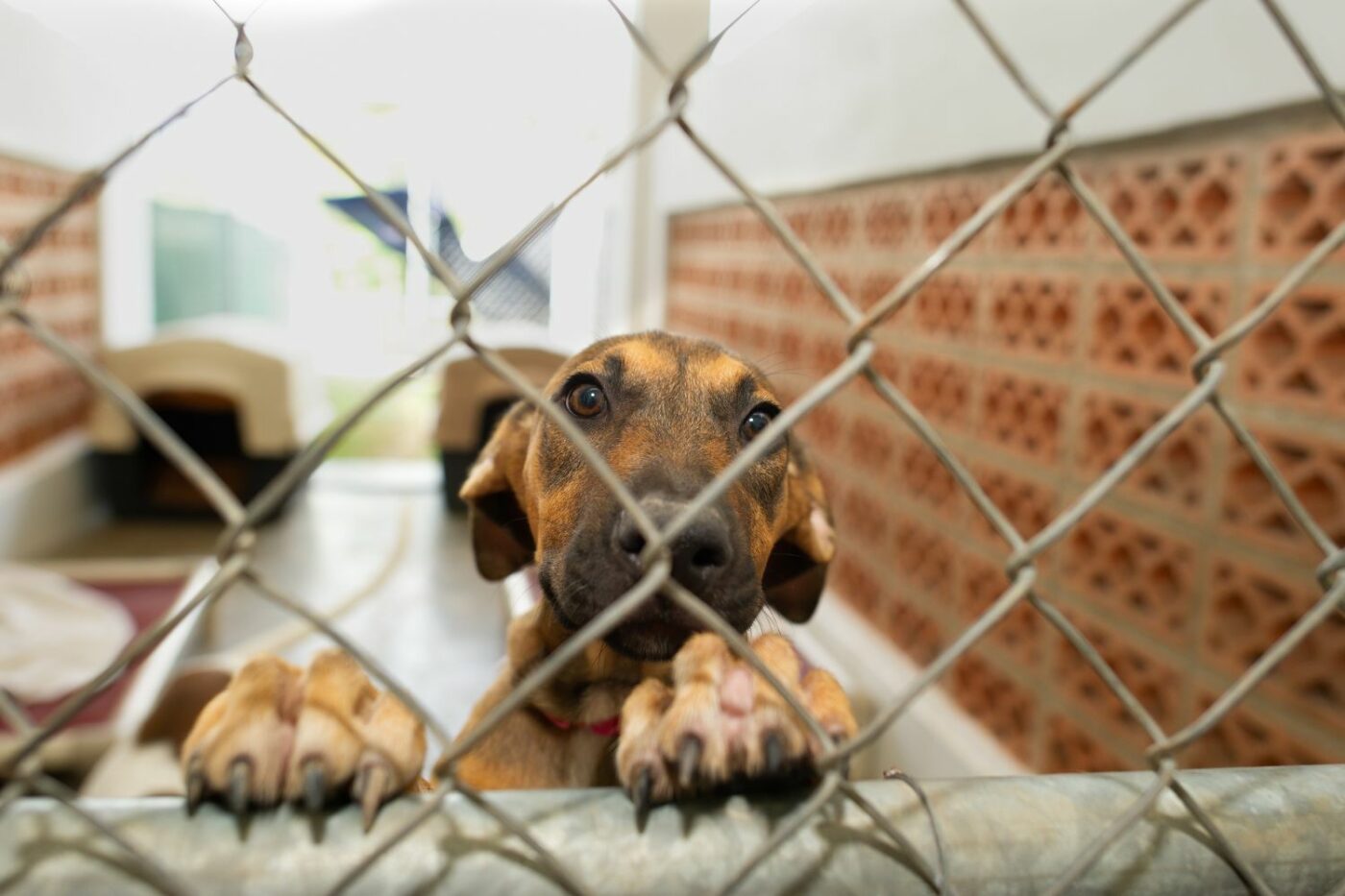
We hope you found this list of dog kennel flooring ideas helpful, but before you decide on the right flooring for your dog kennel, keep these factors in mind.
Is it Comfortable and Safe?
Will your dog be comfortable? Is the floor going to hurt its joints over time? Will bits of gravel get stuck in its paws? Are there spaces in the kennel that it can get stuck in? Consider your dog’s safety before you worry about costs and aesthetics.
Is it Durable?
Will the flooring last for a long time? Is it going to degrade if out in the sun too long? Will it resist scratching and heavy foot traffic? You don’t want to be doing more maintenance and replacement than necessary.
Is it Hygienic?
Is the kennel easy to clean? Does the floor drain well, and is it easy to properly wash and resistant to stains? Think about bacteria buildup, odor, and other factors that could affect the cleanliness and hygiene of the kennel. Cleaning your dog’s kennel is important. Check out this article for a step-by-step guide.
Best Dog Kennel Flooring by Use Case

The best dog kennel flooring depends on how your kennel is used, where it is located, and what your dog needs most. Some flooring types are better for comfort, while others are designed for drainage, durability, or easy cleaning. Here are a few common use cases to help you compare your options.
Best for Comfort: Rubber Flooring or Tenderfoot Flooring
If comfort is your top priority, rubber flooring and Tenderfoot flooring are two of the best options. Both provide a softer surface than concrete, gravel, or epoxy, which can make the kennel more comfortable for dogs that spend a lot of time resting or lying down. These options are especially helpful for senior dogs, large breeds, or dogs with sensitive joints.
Best for Drainage: Gravel Flooring or Raised Flooring
For outdoor kennels that need strong drainage, gravel or raised flooring is a good choice. Gravel allows water to filter through the surface, which can help reduce puddles and mud. Raised flooring keeps your dog elevated above wet ground, making it a practical option for kennels that are exposed to rain or frequent moisture.
Best for Easy Cleaning: Epoxy Flooring or Polyurea Flooring
If easy cleaning is your main concern, epoxy flooring and polyurea flooring are both strong options. These surfaces create a smooth, sealed finish that can be rinsed or wiped down more easily than gravel or wood-style kennel decking. Polyurea is typically more durable and wear-resistant, while epoxy can be a more budget-friendly sealed flooring option.
Best for Durability: Polyurea Flooring
Polyurea flooring is one of the most durable dog kennel flooring options. It is designed to resist moisture, wear, and heavy use, making it a strong choice for busy kennels or outdoor spaces that need a long-lasting surface. While it is usually one of the more expensive options, it can be worth considering if durability and low maintenance are top priorities.
Best for Outdoor Kennels: Kennel Deck Flooring, Raised Flooring, or Gravel Flooring
For outdoor kennels, drainage and weather resistance are especially important. Kennel deck flooring, raised flooring, and gravel flooring can all work well depending on your setup. Kennel deck flooring provides a more comfortable platform than gravel, raised flooring helps keep dogs off wet ground, and gravel is often a lower-cost option with good drainage.
Best Budget-Friendly Option: Gravel Flooring
Gravel flooring is usually one of the least expensive dog kennel flooring options. It can work well for drainage and outdoor use, but it may not be the most comfortable surface for dogs to lie on for long periods of time. If you choose gravel, you may want to pair it with mats or another softer surface in the resting area.
Which of the Dog Kennel Flooring Ideas is Best?
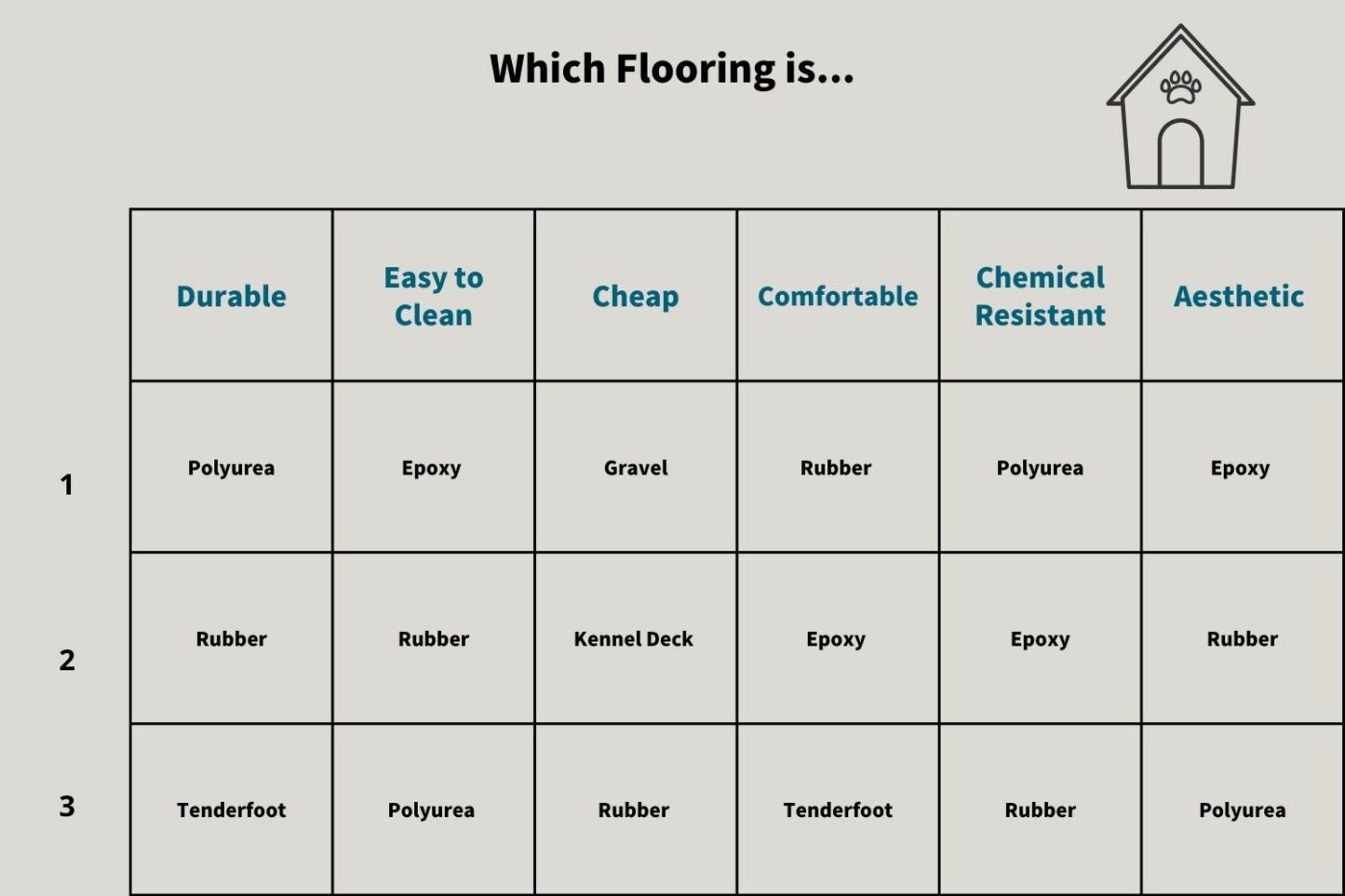
There are multiple options from our list of Dog Kennel Flooring Ideas that could work well for you. There are a lot of good options and very few bad ones. Check out this chart to determine what type of flooring qualities are most important to you.
Dog Kennel Flooring FAQs
Dog Kennels and Dog Kennel Flooring from The Dog Kennel Collection
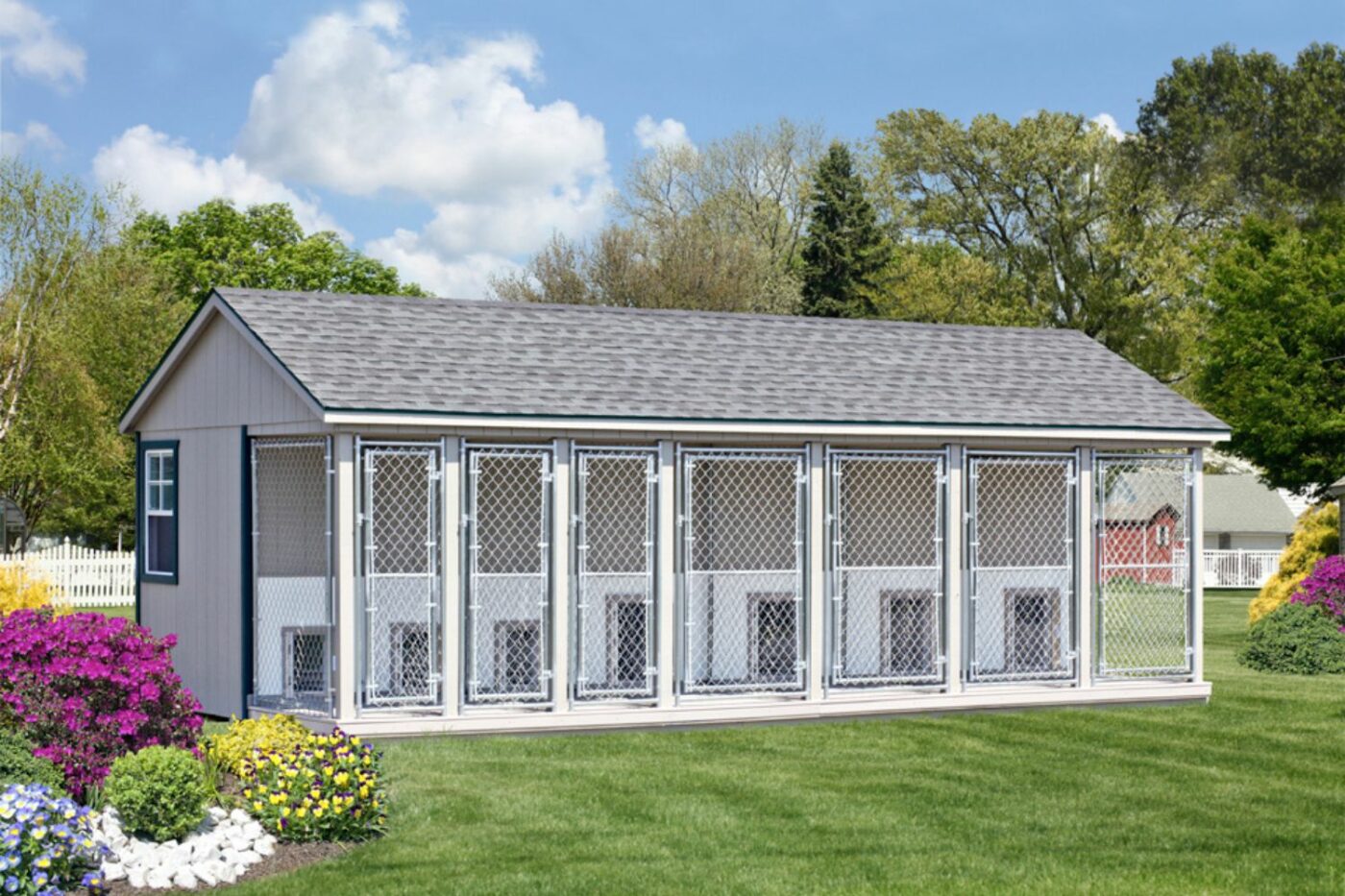
At this point, you may be overwhelmed and not sure what the best choice is for dog kennel flooring. At The Dog Kennel Collection, we offer outdoor dog kennels in PA, made from safe, durable materials. The standard run floor for our custom dog kennels is composite decking, but we offer the following flooring options:
- Polyurea Coated Run Floor
- Tenderfoot Flooring Run Floor
- Polyurea Flooring for Interior
- Interior Raised Floor + Exterior Raised Floor- This type of flooring enables you to use a wire run floor with a wash down underneath for cleaner kennels and allows for heat underneath the indoor kennels for whelping.
We offer a long list of customizable options and features for your dog kennel, whether it’s your preference for flooring, roofing ideas, extra windows, color and style, or dog doors. The list is endless. Get started downloading a catalog to see our full list of options and kennels, or find a dealer near you and get started today!
